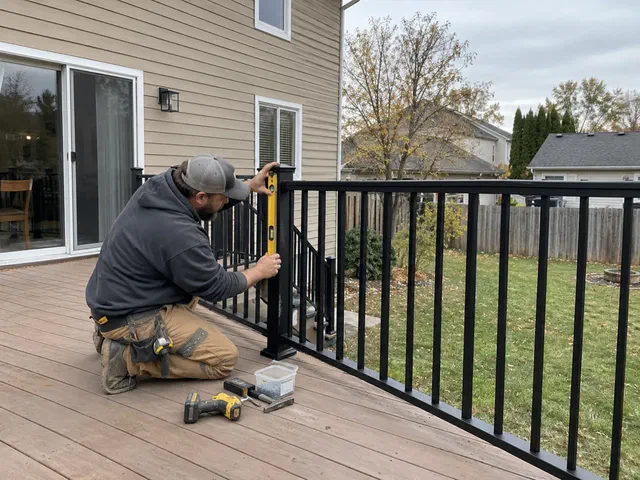
What the Work Involves
We start at the post connection and the stair framing, cause a wobble there can't be fixed with a nicer top rail. On stairs, every step has to be the same height and depth from the deck down to the landing.
Deck Railing Installation Service Details
Deck railing installation includes the guard posts, top and bottom rails, balusters, handrails you can actually grab, stair stringers, treads, risers and a solid landing. Deck railing contractors can put in wood, composite or aluminum deck railing, and cable railing installation depends on the frame, the spacing, and the system you pick.
What You Get
- Firm guardrails at open deck edges
- Stairs that feel even underfoot
- Wood, composite, or aluminum styles coordinated with the deck
Signs You Need This
- Railing posts move when pushed
- Stair treads split near fasteners
- The bottom step lands in mud or standing water
- The handrail is hard to grip
Railing Strength Starts Under the Boards
A guard post needs a solid tie into the framing. Fancy post sleeves and top rails don’t add any strength by themselves, so we check the existing posts before we do a railing-only job.Stairs Need a Solid Landing
The bottom of the stringers shouldn’t sit in dirt or a low spot. We plan a solid landing and drainage so the first and last step stay even and the stringers don’t rot from the bottom up.Picking a Railing Style
Wood’s the cheapest and you can paint or stain it. Composite matches composite decking and doesn’t need sealed. Aluminum’s thin, it doesn’t rust, and it’s easy to see through. Cable gives you the most view but it needs strong end posts to hold the tension. We’ll show you how each one would look on your deck and what it needs underneath.Pricing guidanceHow Deck Railing Installation Is Priced in Indianapolis, IN
Railing cost follows how many feet of it there is, how many posts, the stair sections, the material, and how the posts tie into the frame. Stairs depend on the height, the width, the landing, and whether the opening has to be reframed.